About
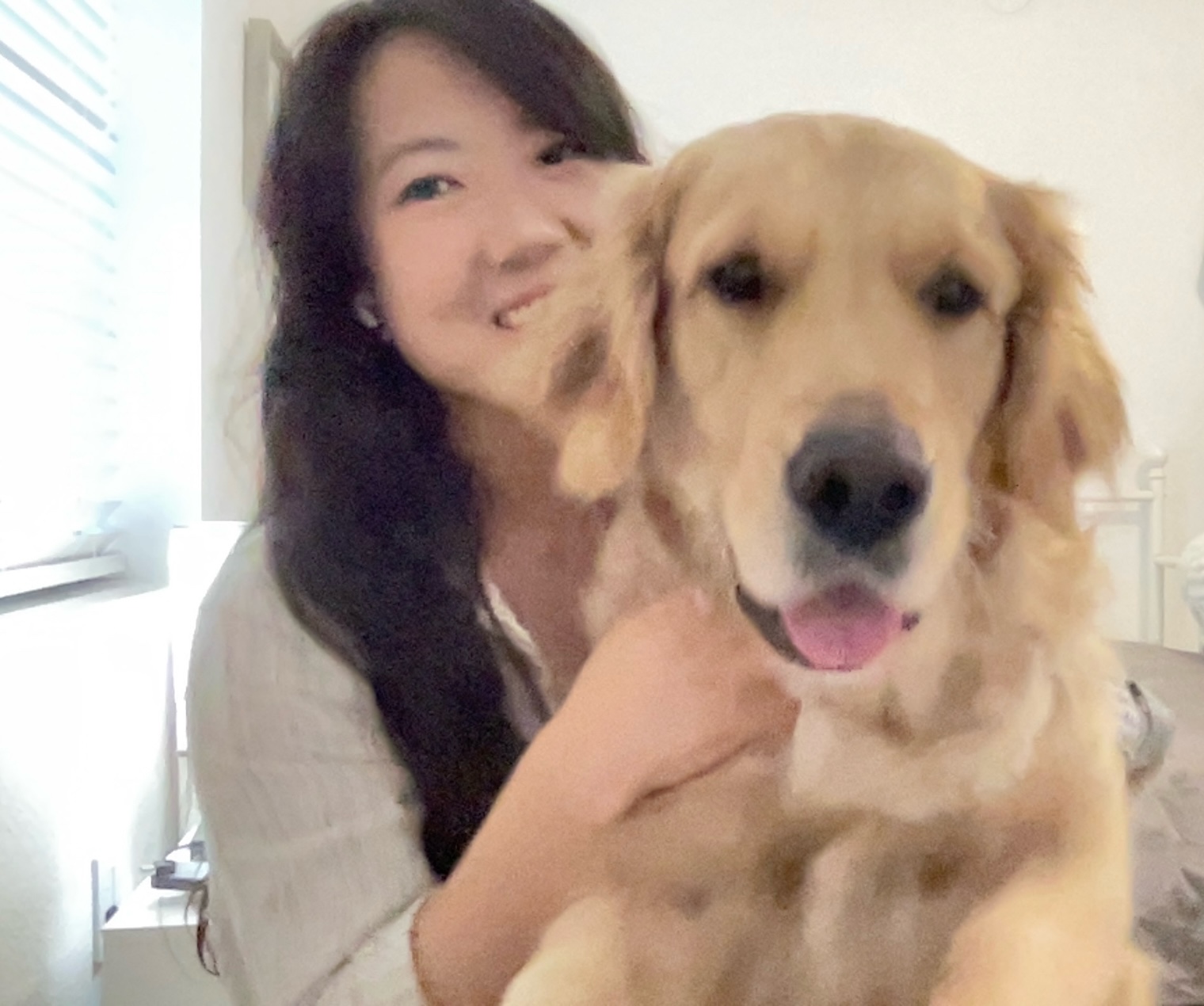
I’m a painter and a PhD candidate in Artificial Intelligence & Geography at Oregon State University, in the Conflict Ecology and Deep Machine Vision groups. My research develops machine-learning methods for Earth observation, in particular over areas of humanitarian and conflict interest. My paintings treat the visual practices of computer-vision researchers (standard test images/objects, depth maps, 3D reconstruction); and the “operational images” which stream in from optical devices embedded in our environments and floating high above our lives.
In both art and research I’m concerned with the places where human and machine vision meet. In my para-academic writing I use the tools of philosophy, Marxism and art history to understand how contemporary information technologies such as AI and remote sensing operate within the world.
I studied physics (BS) and art practice (BA) at Stanford University, followed by an MS in Applied & Engineering Physics, and trained at the Georgetown Atelier of Gage Academy of Art in Seattle. At Stanford I lived in dearly-beloved Synergy House.
CV
Academic CV (PDF) · Art CV (PDF)
Selected exhibitions
- 2026Model Organisms (solo), Corvallis Foundry, Corvallis, OR
- 2026Shifting Light, Chatwin Arts, Seattle, WA
- 2026CVPR Art Gallery, IEEE/CVF Conference on Computer Vision and Pattern Recognition, Denver, CO
- 2019Reversals: 6th Annual Undergraduate Juried Exhibition, Stanford Art Gallery, Stanford, CA
- 2019Somatic Fix, Coulter Art Gallery, Stanford, CA
Art residencies & awards
- 2026Art/Sci Awarded Residency, PLAYA, Summer Lake, OR
- 2026PRAx Art + Science Student Fellowship
- 2026Jackson’s Art Prize, Longlist
- 2020Gage Academy of Art BIPOC Scholarship
- 2019Barbara & Sandy Dornbusch Award in Painting, Stanford
Scientific publications
- C. Robinson, G. Muhawenayo, S. Khanal, Z. Fang, et al. “The first global agricultural field boundary map at 10 m resolution.” Preprint, 2026. PDF
- G. Muhawenayo*, C. Robinson*, S. Khanal*, Z. Fang*, et al. “PRUE: A Practical Recipe for Field Boundary Segmentation at Scale.” CVPR, 2026. arXiv
- S. Adhikari, M. Fishbach, D.E. Holz, R.H. Wechsler, Z. Fang. “The binary–host connection: Astrophysics of gravitational wave binaries from their host galaxy properties.” The Astrophysical Journal 905(1), 2020. doi
- Z. Fang, P.T. Freeman, C.B. Field, K.J. Mach. “Reduced sea ice protection period increases storm exposure in Kivalina, Alaska.” Arctic Science 4(4), 2018. doi
Other writing
- 2027"Marx can help us uncover the black-box nature of AI systems", Counter and Beyond AI – Resistance, Plurality and Possible Worlds (working title), 6th volume of Springer Nature's Digital Transformation and Innovation book series, eds. Kristina Bodrožić-Brnić, Alexandra Crouwers (Leuven University & LUCA School of Arts, Brussels) and Thomas Thiessen (BSP Business and Law School, IDTI).
- 2024“Ghost in a rhetorical machine: Against the reification of artificial intelligence,” essay, Reboot.
- 2021“Trees here, trees elsewhere,” essay, Lausan.
My artwork and writing have also appeared in Bathers Library Mini Mag (2026), PRISM international (2024), HOMINTERN (2019), Phosphene (2014).
Talks & conferences
- 2026“PRUE: A Practical Recipe for Field Boundary Segmentation at Scale,” poster, CVPR main track and CV4Science workshop.
- 2025“Global Field Boundary Delineation Model Zoo and Tooling,” talk, AGU Fall Meeting.
- 2025“Deep-learning transformers for panoptic delineation and monitoring of smallholder agricultural fields across Uganda’s refugee settlements,” poster, AGU Fall Meeting.
- 2025“Transformer methods for universal segmentation of agricultural fields in high-resolution satellite images,” poster, CV4Science workshop, CVPR.
- 2024“‘The purpose of a system is what it does, and science is a thing which people do’: from AI epistemology to AI military ethics,” poster, Harms and Risks of AI in the Military, Mila – Quebec AI Institute.
- 2024“Conflict at the Edge of Visibility,” invited talks, Unfiguring conference, Mahindra Humanities Center, Harvard University, and Architects for Gaza workshop, American University in Cairo.